

PD Dr. Alexandra Titz
Institute of Geography
Research associates
Address
Room: 03.113, Floor: 03
Contact
Consultation Hours
By appointment via email
03/2023: Venia Legendi in Geography (Privatdozentin/Associate Professor)
02/2023: Facultas Docendi in Geography (Habilitation, Dr. habil.)
since 08/2008: Research assistant, Institute of Geography, FAU Erlangen-Nuremberg
05/2006 – 04/2008: Research assistant, Institute of Physical Geography, J.W. Goethe University Frankfurt am Main
10/2005 – 4/2006: Studies in Practical Computer Science and Applied Mathematics, Justus Liebig University Giessen
07/2005: Doctorate (Dr. rer. nat.), Institute of Geography, Justus Liebig University Giessen
04/2001-07/2005: Doctoral studies, Institute of Geography, Justus Liebig University Giessen; doctoral scholarship from the Evangelisches Studienwerk e.V. Villigst
08/2000: Diploma (Geography), Justus Liebig University Giessen
04/1996-08/2000: Diploma studies in Geography, Justus Liebig University Giessen
10/1994-03/2001: Studies in Geography and Biology for teaching at secondary schools, Justus Liebig University Giessen
Offices and committee work at FAU Erlangen-Nürnberg
Since 10/2025: Member of the Faculty Council, Faculty of Natural Sciences
since 10/2023: Women’s representative, Department of Geography and Geosciences
since 10/2023: Board member, Institute of Geography
since 10/2023: Member of the advisory board, John Philip Green Foundation
10/2021-09/2023: Member of the Faculty Council, Faculty of Natural Sciences
10/2017-09/2021: Board member, Department of Geography and Geosciences
10/2017-09/2021: Board member, Institute of Geography
05/2016/-09/2019: Board member, Centre for Teacher Training (ZfL)
since 12/2013: Admissions Committee for Master’s programmes, Institute of Geography
10/2011-09/2013: Women’s representative, Department of Geography and Geosciences
since 05/2011: Programme management, Institute of Geography
My research focuses on the intersection of geographical development studies, urban studies, disaster studies and the associated society-environment interactions. Current research involves an interdisciplinary and transdisciplinary analysis of living environments and livelihoods, which are constantly challenged and contested in a state of flux due to social pressures, environmental and climate change, and hazards and risks. Aspects of urban development, regulatory processes in cities, and patterns of vulnerability in risk and disaster contexts are particularly important here. I also focus on serious disruptions to everyday life, and the challenges and opportunities involved in adapting to, dealing with, and overcoming threats. Related to this is my current research on urban food and livelihood security, and urban green infrastructure, with the aim of establishing fair, inclusive, sustainable and resilient cities.
Ongoing research projects
HARVEST – Harnessing Social Innovations for Enhanced Food Security: Alternative Food Networks in cities in Tanzania and Nepal
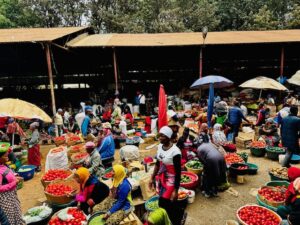
(Titz 2025)
The HARVEST project aims to explore ways of strengthening local food systems and exploiting the full potential of territorial markets to improve food security, food quality and employment opportunities in the cities of Arusha (Tanzania) and Kathmandu (Nepal) through collaborative research. By focusing on mobilising alternative food networks (AFNs), such as edible gardens, contract farming and pop-up farmers’ markets, we aim to identify the key factors that lead to the emergence and development of social innovation processes. These processes create new forms of organisation among food sector actors, as well as new relationships and modes of interaction between producers and consumers. They also have the potential to increase the effectiveness of AFNs and contribute to sustainable and socially just food security. Through applied research, the project aims to generate urgently needed knowledge for evidence-based policymaking and to find viable, sustainable solutions to challenges in the area of food security and livelihoods under uncertain and crisis-prone conditions. A transdisciplinary research process based on joint knowledge creation and horizontal and vertical knowledge exchange will help to promote the implementation potential of the project results.
Agriculture, Food Security and Urban Development in Kathmandu Valley/Nepal
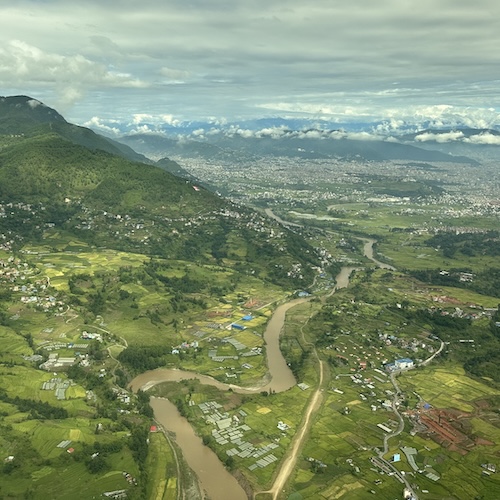
The combined effects of rapid population growth in the Kathmandu Valley, weak institutional capacity and rising demand for land, services and housing are leading to a significant decline in green spaces and ecosystem services. This is resulting in the impairment of biodiversity and a deterioration in urban populations’ access to safe food, water and income-generating opportunities. These issues are having an increasingly negative impact on sustainable development and the achievement of national and international development goals, including the SDGs. They are also affecting livelihoods and food security in urban, peri-urban and rural areas.
In recent years, significant changes have been observed in the traditional urban agricultural system on the outskirts of the city: ambitious infrastructure and urban development projects are competing for land, while many farmers are becoming more interested in commercial agriculture, such as the cultivation of high-value crops and horticulture, and less interested in subsistence farming. Recurring crises and disasters, such as the 2015 earthquake in Nepal and the COVID-19 pandemic, have also highlighted the vulnerability of conventional agricultural and food systems.
Agriculture in the Kathmandu Valley is therefore subject to competing land use demands and increased pressure to adapt. In recent years, small-scale farmers and agribusinesses have responded to this by building greenhouses, since expanding the area under cultivation is not feasible. However, these current developments have not yet been systematically investigated. To address this, the project, which is funded by the Sonderfonds für wissenschaftliches Arbeiten an der Universität Erlangen-Nürnberg, will examine the temporal and spatial dynamics of greenhouse cultivation, as well as its role and impact within the urban agricultural system of the Kathmandu Valley. The project will also consider land use, operational structures, economic forms, cultivated products, labour requirements and marketing.
Completed research projects and research work
CHIDA – Inclusive Urban Development in Africa: Designing Nature-Based Solutions and Enhancing Citizenship to Mitigate Hazards and Livelihood Risks
Cities in sub-Saharan Africa are undergoing extremely dynamic transformation processes. Those involved in urban development and administration, including residents, are confronted with a multitude of contradictory change phenomena that undermine efforts to achieve the Sustainable Development Goals (SDGs) and the objectives of the New Urban Agenda (NUA), making it difficult to build urban resilience and sustainability. Uncertainties influenced by climate change, as well as environmental, social and economic stressors and risks, are accumulating and exacerbating the already precarious living conditions of vulnerable urban residents. City administrations and others involved in urban planning and management are also affected, as they increasingly lack the resources and capacities to fulfil their roles adequately. The CHIDA* project, which was funded by the BMBF until the end of 2024, examined these challenges by taking a nature-based solutions (NbS) approach. The international project consortium focused on the interrelationships between NbS, especially urban green infrastructure (GI), civic engagement, livelihoods, and food security. Using the example of four cities in Malawi and South Africa, the consortium investigated the potential of NbS to effectively counter the threats and risks of urban living environments.
*Chida = tool, instrument in Chichewa, the official language of Malawi
Sustainable urban livelihoods in the context of disaster
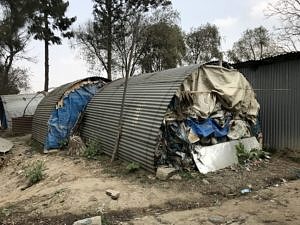
In spring 2015, Nepal, a Himalayan state, was rocked by a devastating earthquake. As a result, around 17,000 people fled the worst-affected rural areas for the Kathmandu Valley. Many of these internally displaced persons (IDPs) were still living in temporary shelters in extremely precarious and insecure conditions, years after the disaster. While the reasons why people flee or are displaced in the event of a disaster are relatively well understood, uncertainties remain about what causes people to remain in displacement locations for extended periods of time. This project aimed to improve our understanding of the factors that cause IDPs’ living conditions to remain unchanged many years after the earthquake.
Sustainable urban livelihoods and urban green infrastructure in Bangkok und Singapur
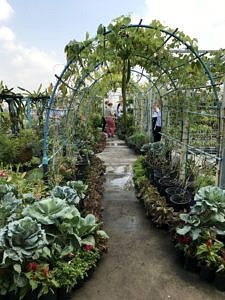
Metropolitan regions in Southeast Asia are currently experiencing rapid change, resulting in numerous isolated or fragmented urban neighbourhoods and living environments characterised by injustice, insecurity and physical and psychological vulnerability. Examining these processes in the context of the interrelationships between civic engagement, justice, livelihoods and food security, and urban green infrastructure, the project used Bangkok and Singapore as examples to find solutions for inclusive urban development. Adopting a normative approach, the project focused on the concept of the ‘just city’: only a city characterised by social integration, civic engagement, ingenuity, and creativity can be resilient and sustainable. The project was funded by the Dr Hertha and Helmut Schmauser Foundation.
LIPSINDAR – Linking Partners for a Sustainable and Inclusive Dar es Salaam
The BMBF networking project, LIPSINDAR, involved three project consortia: AfriCity (University of Erlangen-Nuremberg, FAU), ECOSOLA (University of Oldenburg) and GOPLAREA (University of Dortmund). It addressed risk, resilience, sustainable living, food security, governance, planning, inclusion processes, green infrastructure and social adaptability in cities in Eastern and Southern Africa, adopting a variety of disciplinary and thematic perspectives. The project focused on institutions, social order processes, the inclusive city and resilience-prone livelihoods. The project’s overarching goal was to link the activities of the individual projects via the common theme of ‘Sustainable City of the Future’, working on them in a focused, integrative, interdisciplinary and transdisciplinary manner using the case study of the mega-city of Dar es Salaam.
AfriCity – Adaptability, Food Security, Risk, and the Right to the City in Sub-Saharan Africa: Towards Sustainable Livelihoods and Green Infrastructure
The AfriCity project addressed the challenges faced by urban residents in Eastern and Southern Africa in the context of climate, social, and economic change. It aimed to promote sustainable urban living and social adaptability through an innovative approach that improves understanding of the links between urban green infrastructure and the right to the city. This project, funded by the BMBF and DAAD, was particularly innovative in its thematic focus on a highly topical issue: green infrastructure in cities, interpreted beyond mere aestheticisation and open space design. Instead, it was regarded as a means of creating a fair city for everyone, a concept that is only gradually being incorporated into research and urban development practices in sub-Saharan Africa. The close integration of research and graduate training, as well as its link to planning practice, also played a key role in the project. Funded by the BMBF and DAAD until 2021, the project formed part of the German government’s strategy, ‘Partnerships for Sustainable Solutions with Sub-Saharan Africa’, which aims to promote the internationalisation of science and research.
Further completed research projects and research work
CaDRiR Nepal – Culturally adapted Disaster Risk Reduction in Nepal (Bayerische Forschungsallianz, 2016)
Competing Orders in post-conflict Nepal (Schmauser-Stiftung, 2013-2016)
Mountain Poverty and Environmental Change in the Nepal-Himalayas (2009-2010)
start – Management Strategies for Pharmaceuticals in Drinking Water (BMBF, 2006-2008; Wissenschaftliche Mitarbeiterin)
Natural hazards in Nepal: Impact and perception from a gender perspective (JLU Gießen, 2003)
Natural hazards and natural risks in the Nepal Himalayas. A geographical analysis of causes, effects and the effectiveness of protective measures (dissertation project, scholarship funded by Evangelisches Studienwerk e.V., 2001-2005)
Journals and anthologies
Bauer, W. & Titz, A. (2025): Manoeuvring barriers: Assessing adaptive strategies for and persistent barriers to urban Nature-based Solutions in Lilongwe, Malawi. Nature-based Solutions 7 (June 2025). https://doi.org/10.1016/j.nbsj.2025.100224
Bauer, W., Titz, A. & Manda, M. (2024): Tracing the Urbanisation of Risk in Malawi. A Multilevel Analysis. Jámbà: Journal of Disaster Risk Studies 16(1). https://doi.org/10.4102/jamba.v16i1.1668
Bauer, W., Krüger, F. & Titz, A. (2024): NaturbasierteLösungen für einenachhaltige undinklusiveStadtentwicklungim subsaharischenAfrikaDas Beispiel Lilongwe, Malawi. Standort, Februar 2024. https://doi.org/10.1007/s00548-024-00910-4
Titz, A. (2021): Geographies of Doing Nothing – INternal Displacement and Practices of Post-Disaster Recovery in Urban Areas of Kathmandu Valley, Nepal. Social Sciences 10(3), 110. https://doi.org/10.3390/socsci10030110
Krüger, F., Titz, A., Arndt, R., Groß, F., Mehrbach, F., Pajung, V., Suda, L., Wadenstorfer, M., Wimmer, L. (2021): The Bus Rapid Transit (BRT) in Dar es Salaam: A Pilot Study on Critical Infrastructure, Sustainable Urban Development and Livelihoods. Sustainability, 13(3), 1058. https://doi.org/10.3390/su13031058.
Krüger, F., Drescher, A., Louis, N. & Titz, A. (2019): Das subsaharische Afrika. Entwicklungsdynamiken, Herausforderungen, Lösungsversuche. Geographische Rundschau (11). 4-9.
Titz, A., Chiotha, S. (2019): Pathways for Sustainable and Inclusive Cities in Southern and Eastern Africa through Urban Green Infrastructure? Sustainability 11(10), 2729. DOI:10.3390/su11102729
Titz, A., Cannon, T. & F. Krüger (2018): Uncovering ‘Community’: Challenging an Elusive Concept in Development and Disaster Related Work. Societies 8(3), 71. DOI:10.3390/soc8030071
Titz, A. (2018): Button, Gregory V., and Mark Schuller (eds.): Contextualizing Disaster. Anthropos 113(1): 285 – 286. DOI: 10.5771/0257-9774-2018-1-285 (Rezension)
Krüger, F. & Titz, A. (2017): USA regional: Mythos und Alltagskultur – der Mittlere Westen. In: Gamerith, W. & Gerhard, U. (Hrsg.): Kulturgeographie der USA. Eine Nation begreifen: 51-57. Springer Spektrum, Wiesbaden.
Titz, A., Grießinger, J. & Raven, S. (2016): Naturgefahren und Naturgefahrenmanagement im Oberen Paznauntal/Tirol. Mitteilungen der Fränkischen Geographischen Gesellschaft 61/62: 47-60.
Geiselhart, K.; Fleischer, M.; Fürmaier, P.; Haferburg, Ch.; Kaplan, L.; Kieslinger, J.; Kordel, S.; Kress, M.; Lendl, J.; Orlowski, B.; Pohle, P.; Schnorr, K.; Titz, A. & Weidinger, T. (2015): Kulturgeographisches Geländepraktikum. Erlanger Skripte zum Geographiestudium (ESGEO) Band 4. Institut für Geographie. Erlangen.
Fuchs, S., Gerhard, U., Krüger, F. & Titz, A. (2015): Der Mittlere Westen – Dynamische Veränderungen im Herzen der USA. Geographische Rundschau (3). 4-11.
Cannon, T., Titz, A. & Krüger, F. (2014): The myth of community? In: Cannon, T., Shipper, L., Bankoff, G. & Krüger, F. (Eds.): World Disasters Report 2014. Focus on Culture and Risk: 93-119. International Federation of Red Cross and Red Crescent Societies (IFRC), Genf.
Titz, A. (2012): Naturgefahren als Entwicklungshemmnis. Das Beispiel Nepal-Himalaya. Praxis Geographie 42(9): 34-38.
Titz A. (2011): Naturgefahren und Naturgefahrenmanagement in Nepal. Geographische Rundschau 63(1): 58-65.
Titz, A. & Döll, P. (2009): Actor modelling and its contribution to the development of integrative strategies for management of pharmaceuticals in drinking water. Social Science & Medicine 68(4):672-681. 10.1016/j.socscimed.2008.11.031
Haffner, W., Benachib, H., Brock, C., Gerique-Zipfel, A., Merk, K., Morkel, S., Park, M., Pohle P., Titz, A. & Werning, K. (2003). Sustainable Livelihood in Southern Mustang District. In: Domroes, M. (Ed.): Translating Development. The Case of Nepal: 282-312. New Delhi.
Titz, A. (1999): Historische und aktuelle Bedrohung durch glaziale Naturgefahren im Venter Tal. In: Pohle, P. (Ed.): Besiedlung und Erschließung der Alpen. Berichte eines Studienprojektes im Venter Tal 1997. Werkstattpapiere 11: 103-116. Gießen.
Monographs
Titz, A. (2023): The multiple layers of injustice in contexts of disaster and development: A fuzzy landscape of concepts and diverging issues. Habilitationsschrift. FAU erlangen-Nürnerg.
Titz, A. (2005): Naturgefahren und Naturrisiken im Nepal-Himalaya. Eine geographische Analyse von Ursachen, Auswirkungen und der Wirksamkeit von Schutzmaßnahmen (Dissertation). Verfügbar unter: http://dx.doi.org/10.22029/jlupub-9533
Titz, A. (2000): Naturrisiken und Siedlungsentwicklung in Nepal-Himalaya. Eine regionale Analyse aus dem südlichen Mustang Distrikt. Unveröffentlichte Diplomarbeit. Gießen.
Online reports
Titz, A. und Krüger, F. (2015): Warum war man in Nepal auf das Erdbeben vom 25. April 2015 schlecht vorbereitet? Verfügbar unter https://www.fau.de/2015/05/news/nachgefragt/warum-war-man-in-nepal-auf-das-erdbeben-vom-25-april-2015-schlecht-vorbereitet
Titz, A. und Grießinger, J. (2013): Naturgefahren und Naturgefahrenmanagement im Oberengadin. Virtuelle Posterausstellung. Wissenschaftliche Ergebnisse des Projektseminars. Verfügbar unter: https://www.geographie.nat.fau.de/studium/exkursionen-und-projekte/projektseminar-naturgefahren-und-naturgefahrenmanagement/
Titz, A. (2002): Traditional Settlement Pattern and Natural Risks in Southern Mustang District. Verfügbar unter: http://www.uni-giessen.de/%7Egg1057/nepal/risks.htm
Master's thesis
Klara Andres (2025): Aufenthaltsqualität und Walkabilty – Fußverkehrsfreundliche Gestaltung zur Steigerung der Aufenthaltsqualität in Städten.
Anja Merten (2025): Urbane Resilienz wider baukulturellem Erbe? Klimawandelbezogene Anpassungsstrategien deutscher Weltkulturerbestädte aus Governance-Perspektive.
Nicolas Porscha (2024): Der Palmöl-Importstopp der EU und seine Bedeutung für Green Grabs.
Martina Wandenstorfer (2023): Portraying Urban Household Gardeners in the Eastern Cape, South Africa.
Naomi Pappenberger-Muench (2022): Gerechte Wiederherstellungsprozesse nach Katastrophen (Just Disaster Recovery).
Fabian Scala (2021): Die soziale Resilienz auf Gemeinschaftsebene und kulturelle Katastrophenbewältigung auf den Philippinen während der COVID-19 Pandemie.
Pia Leonhardt (2021): Partizipatives Photovoice-Projekt in Chellenam, Indien: Subjektive und lokale Perspektiven auf Risiko, Resilienz und Vulnerabilität.
Jan-Christoph Theis (2017): Alltägliche Bewältigungsstrategien im Umgang mit Katastrophen – die Erdbeben 2015 in Nepal.
Tabea Rösch (2016): „Wir können Integration“ – oder doch nicht? Die kommunale Integration von Flüchtlingen in Nürnberg.
Juliane Amend (2016): Die Risikowahrnehmung alpiner Naturgefahren im Bergsport vor dem Hintergrund klimatischer Veränderungen im Alpenraum.
Stephanie Reich (2015): Demographischer Wandel in Deutschalnd – Auswirkungen und Maßnahmen. Eine regionale Betrachtung der Region Oberpfalz (Bayern).
Kristina Roth (2012): Evaluation und Erschließung von Absatzmärkten für Bio-Cash-Crops kleinbäuerlicher Haushalte in Kaule / Nuwakot Distrikt, Nepal
Bachelor's thesis
William Wenzel (laufend): Urbane Klimaresilienz und soziale Gerechtigkeit
Manuel Reithmeier (laufend): Urban Gardening – Chancen und Grenzen für die gesellschaftliche Entwicklung von Stadtquartieren.
Jona Logemann (laufend): Urbane Informalität in Subsahara Afrika.
Katharina Fürstenhöfer (2025): Milderung des Hitzeinseleffekts in Städten durch Blau-Grüne Infrastruktur.
Aline Jonas (2025): Recht auf Stadt oder Stadt von rechts? Rechte Raumproduktion und die diskursive Deutung urbaner Räume am Beispiel Chemnitz.
Acelya Yilmaz (2025): Neue Leipzig Charta: Umsetzung der „gerechten“ und „grünen“ Stadt am Beispiel von München.
Paulina Lorenz (2023): Postkoloniale Perspektiven auf Entwicklungszusammenarbeit: Eine Analyse über die (Un-)Möglichkeit einer Integration postkolonialer Perspektiven in die Entwicklungszusammenarbeit.
Anna Ackermann (2022): Auswirkungen von Tourismus in Destinationen des Globalen Südens – Das Beispiel Bali.
Margret Igel (2022): Auswirkungen von Landregulierungsprozessen auf die Landrechte von Frauen und die Ernährungssicherung in Subsahara–Afrika.
Amelie Roder (2020): Entwicklungspolitik deutscher Städte durch Partnerschaften mit afrikanischen Kommunen am Beispiel der Projekt-partnerschaft Nürnberg-Sokodé.
Raphaela Sauerer (2020): Chancen und Risiken von Game Farms. Eine Analyse der nachhaltigen Landnutzung am Beispiel Ubuntu, Südafrika.
Moritz Paul (2018): Kommunikation im Katastrophenschutz. Herausforderungen einer barrierfreien Kommunikation
Marina Barbieri (2018): Transnationale Dispute bei Großstaudammprojekten zwischen Indien und Pakistan
Bastian Tarantik (2018): Inwiefern eignen sich die Konzepte der Informalität als Grundlage für die Entwicklung von Strategien zur Armutsreduzierung in Sub-Sahara Afrika?
Caroline Sieg (2017): Stadträumliche Ausprägungen des sozialen Wandels in Frankfurt am Main
Carina Austermühl (2017): Wahnehmung von Naturereignissen, Risiken und Schutzmaßnahmen
Valerie Haas (2016): Großstaudammprojekte: Entwicklungshilfe auf Kosten von Mensch und Natur?
Meike Zimmermann (2015): Der Good Governance-Ansatz – kritische Darstellung des Konzepts am Beispiel der Entwicklungszusammenarbeit zwischen Deutschland und Peru.
Theresa Luber (2015): Ambivalenz der Informalität. Slums als Ressource für die städtischen Armen? Untersuchung der These am Beispiel der informellen Siedlung Viwandani, Nairobi/Kenia
Anna Kuczera (2015): Naturkatastrophenmanagement und Kultur. Eine Untersuchung des kulturspezifischen Umgangs mit Katastrophen im Rahmen der Umsetzung von Disaster Risk Reduction-Strategien
Tim Leprich (2015): Afrika, Kontinent der Chancen – politische und ökonomische Perspektiven eines aufstrebenden Erdteils
Tabea Rösch (2014): Die Integration von Asylbewerbern und geduldeten Fklüchtlingen in den deutschen Arbeitsmarkt
Sarah Schwarz (2014): Der Ölpalmenboomm in Malaysia und Indonesien – Die ökologischen, sozialen und ökonomischen Auswirkungen
Franziska Sammet (2013): Klimawandel und Landwirtschaft im Nepal-Himalaya – Wahrnehmung, Auswirkungen und Anpassungsstrategien am Beispiel des Kali Gandiki-Tals/Mustang Distrikt
Juliane Amend (2013): Der informelle Sektor in Entwicklungsländern – Die Relevanz von Institutionen und sozialen Netzwerken für die Wirtschaftsleistung am Fallbeispiel Indien
Antonia Hofmann (2013): Grüne Gentechnik im Kontext Ernährungssicherheit – Chancen und Risiken am Beispiel der „Länder des Südens“
Eva Maidhof (2013): Nairobi, Kenia: Ausweg Stadt? – Land-Stadt-Migration, stadträumliche Exklusion und Armut. Auswirkungen am Beispiel der informellen Siedlung Viwandani
Felix Boas (2012): Das Mikrofinanzwesen als Mittel zur Armutsbekämpfung am Fallbeispiel Bangladesh
Katrin Schatz (2012): Fleischkonsum in Deutschland – Futtermittelimporte oder lokale Eiweißstrategie als Lösung?
Sandra März (2012): Genderdisparitäten in den Ländern des Südens
Kristina Schnorr (2012): Ausländischer Landerwerb – „Land Grabbing“ oder eine Chance auf Entwicklung in den Ländern des Südens?
Teacher training thesis
Patrick Vogel (2025): Zwischen Klimawandel, COVID und sozialer Ungleichheit: Urbane Verwundbarkeit und Anpassungsstrategien in Bangkok.
Genrich Morasch (2025): Klimawandelbedingte Auswirkungen auf die menschliche Gesundheit in urbanen Räumen am Beispiel von Bangkok.
Lorena Buscemi (2024): Umgang mit Naturkatastrophen – Vorreiterrolle Japans im Umgang mit Erdbeben und Tsunamis?
Roland Deißer (2021): Umsetzung der Nachhaltigkeitsziele der UN auf lokaler Ebene – Das Stadtquartier Leipzig 416.
Jim Vock (2021): Vom Wirtschaftswald zurück zum Urwald – Eine Analyse von Waldpolitik und Naturschutz am Beispiel des Nationalparks Schwarzwald.
Thea Kakavand (2017): Ernährungssicherung im Hochgebirge im Angesicht klimatischer Veränderungen.
Tanja Wilhelm (2015): Kulturspezifische Risikowahrnehmung und Katastrophenvorsorge.
Stephanie Reich (2014): Vom Landwirt zum Energiewirt – eine Chance für die Landwirtschaft? J
udith Kratzel (2013): Resource rich but policy poor. Potenziale und Herausforderungen der Energieversorgung in Nepal unter besonderer Berücksichtigung der Wasserkraft