
Multisensory City Walk
Field Class with Marie Duchêne and Dr. des. Lena Schlegel
In Lena Schlegel’s advanced MA class, we took a deep dive into qualitative methods of society-environment research. In addition to qualitative interviews and ethnographic research, we found there is much more, such as multisensory approaches. Of course, this is best learned in the field using one’s own senses. A multisensory city walk was chosen as the method to explore. This approach challenges researchers to explore their environments not just through what can be seen, but also with the other senses.
The city walk was led by Marie Duchêne, who, together with other students and colleagues, developed a ‚multisensory city guide‘, recently published in the journal Sub\Urban. At the end of January, the seminar participants met downtown and set out to explore Erlangen with the sensory guide. The guide suggests specific locations to visit, such as a green space, a busy area, or a small path. This means that the guide can be used in any city. Furthermore, there is no set route. The students divided into small groups, each of which visited different locations. The guide also suggests various incentives for reflection that appeal to all the senses, for example:
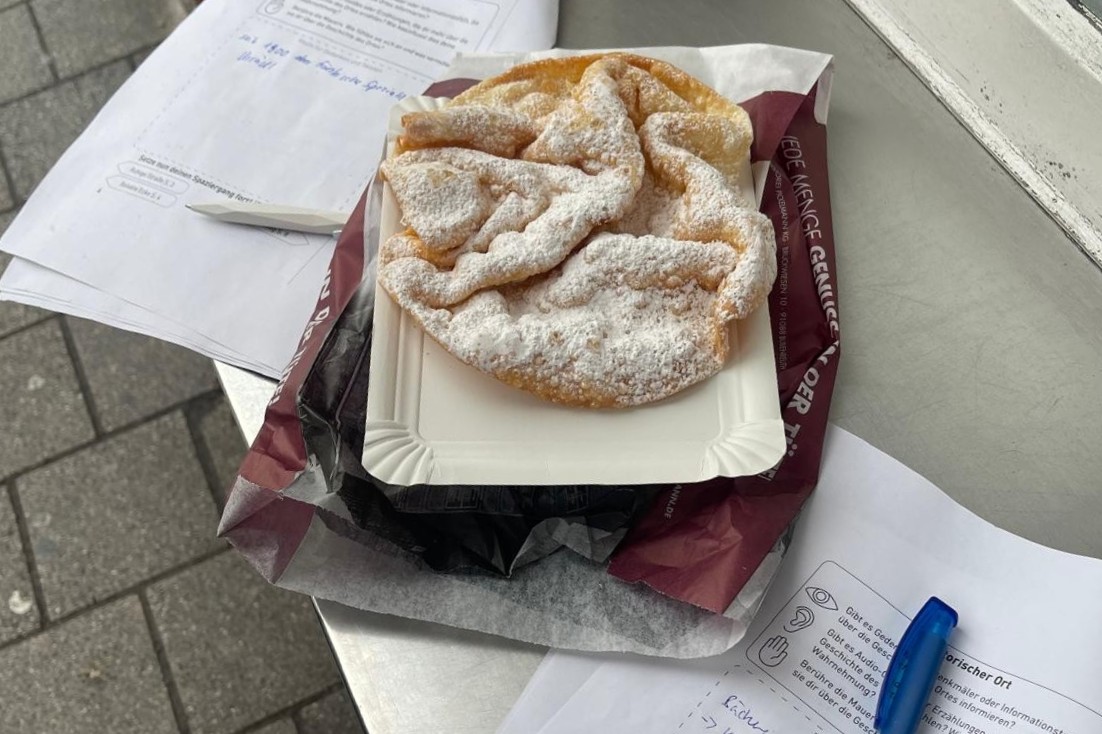
- Try local specialties. How does this taste influence your perception of the environment?
- Close your eyes and listen carefully to the sounds around you. Name the ones you hear, whether natural or urban, and reflect on whether they are pleasant or not.
- Touch and describe the material of seating options and reflect on what it does to the place and whether you would stay longer.
After the multisensory walk, we met again in the city centre and reflected together on what each group had experienced. We were amazed at how much you can perceive, how much the weather (it had snowed beforehand) matters, and how different perceptions are. For example, whether you perceive a street as loud or not, may depend on where you grew up, e.g. from a big city or a rural area – a reminder to always reflect one’s own personality. Finally, we talked about how a multisensory walk can be used to explore our own research questions further. The sensory walk enriched our knowledge of qualitative methods and supported it with real hands-on experience.
Text: Anna Wißmüller, Foto: Antonia Biersch, Lokale Spezialität „Urrädla“
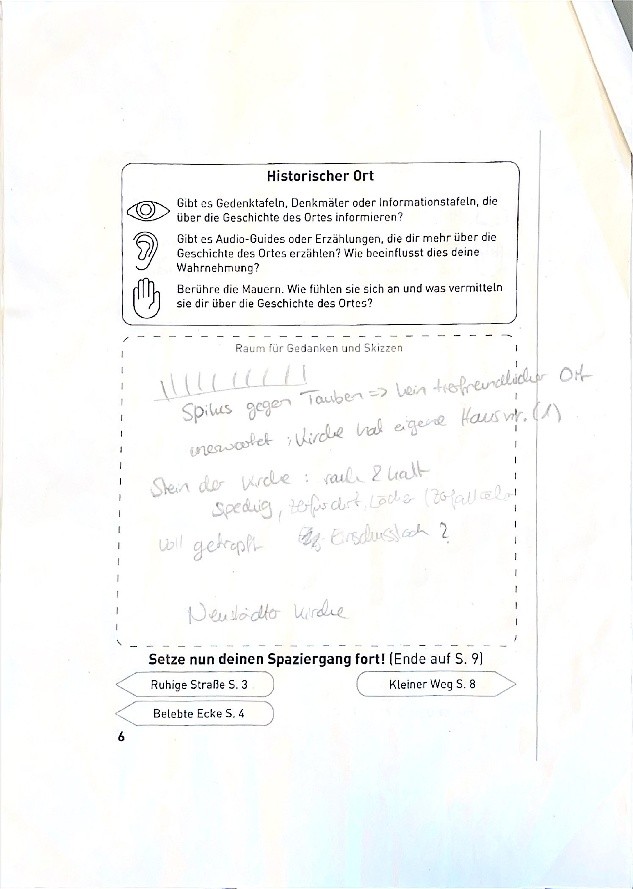
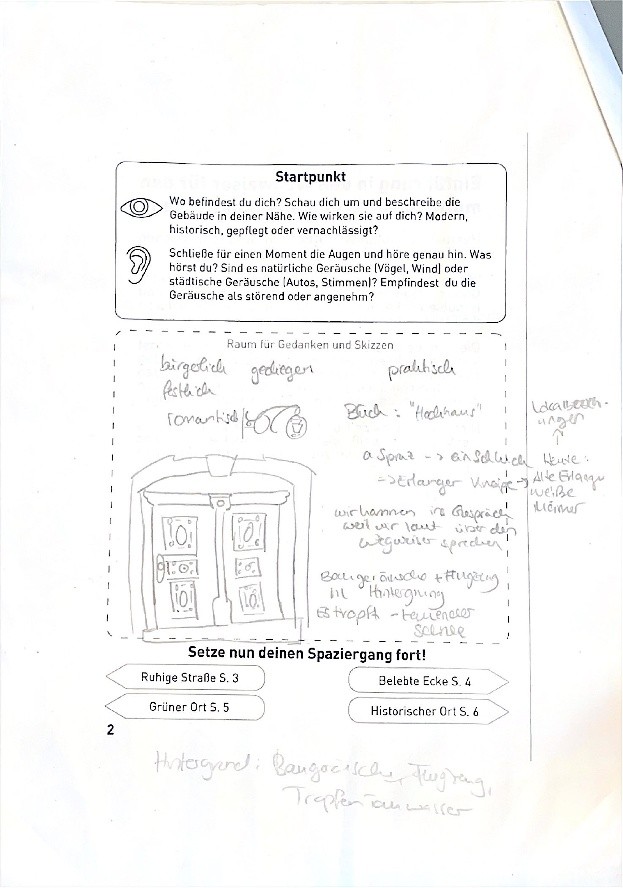
Impressions from the Sensory Guide: Marie Duchêne
Article:
Akyildiz, Aylin, Tanja Beier, Marie Duchêne (2025): Spazierend die Stadt erforschen?! Potenziale des Stadtspaziergangs für ko-kreative Forschung. Sub\Urban: Zeitschrift für kritische Stadtforschung, Bd. 12 Nr. 2/3, S. 393-407. https://doi.org/10.36900/suburban.v13i2/3.1057.