
Spaces of Rights and Responsibilities Beyond Territory
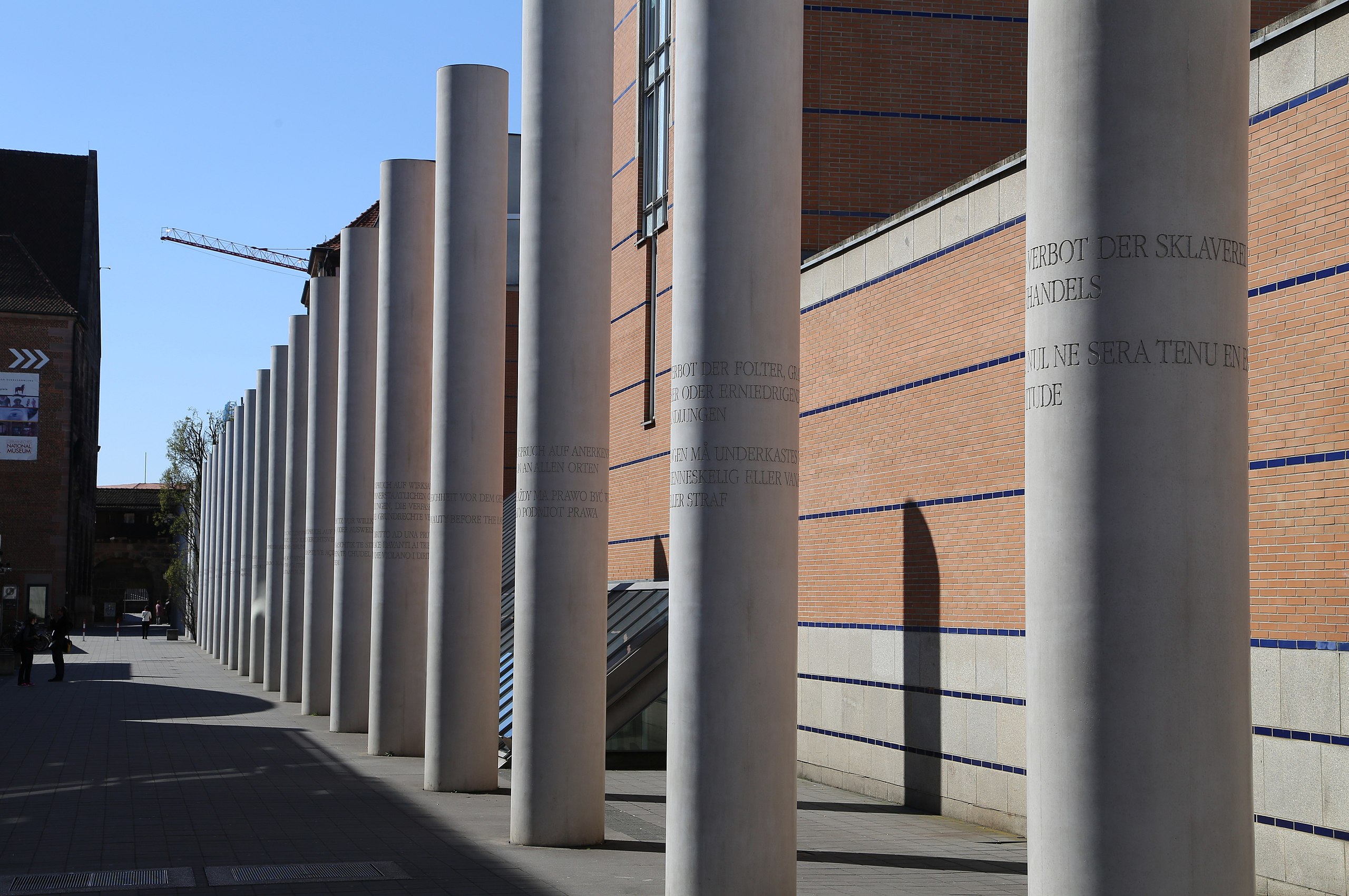
2½-day interdisciplinary workshop
June 17 (afternoon)-19 (early afternoon) 2026 – Nuremberg
Organized within the Cluster of Excellence Transforming Human Rights
FAU Erlangen-Nürnberg

Registration is now open
Registration for the conference is now open. Invited speakers are kindly asked to complete their formal registration here and to upload their abstract again, if applicable in a revised version.
A limited number of places is available for guests. If you are interested in attending the conference, please register as a guest.
Background
How can human rights be conceptualized in a world shaped by mobility, digital networks, global infrastructures, and planetary environmental crises? Territorial conceptions of space, long central to human rights law and governance, are increasingly challenged by spatial configurations that exceed jurisdictional borders and destabilize established assumptions about responsibility and accountability. While international human rights law remains largely framed around territorial jurisdiction, rights are more and more exercised and harms produced in contexts that elude clear territorial definition.
This workshop stems from the observation that prevailing human rights frameworks insufficiently capture the spatial conditions under which rights are produced, limited, and contested today. It explores how thinking with and through space can contribute to reframing core concepts of human rights, responsibility, and accountability, particularly in contexts where power, agency, risk, and harm are distributed across transnational, socio-technical, and more-than-human configurations.
Workshop Focus
The workshop brings together scholars from human rights research, geography, law, and related social sciences and humanities to engage with contemporary spatial debates that challenge territorially-bounded understandings of rights and responsibility in the human rights context. Rather than treating space as a neutral container, this workshop will build on approaches that conceptualize space as relationally produced, materially and technologically mediated, historically situated, and politically contested.
A central focus lies on key spatial tensions shaping contemporary human rights debates, including, but not limited to, tensions between:
- territorially-bounded jurisdiction and networked or infrastructural forms of power;
- visible sites of legal and political decision-making and the often-invisible infrastructures and technologies, through which rights are shaped and unevenly distributed;
- human-centered legal assumptions and more-than-human constellations of agency.
Topics
We invite contributions that engage with these questions from conceptual, theoretical, or empirically grounded perspectives. Relevant themes include, but are not limited to:
- Territorial jurisdiction, extraterritorial obligations, and the spatial limits of human rights law
- Spatial reconfigurations of responsibility and accountability
- Relational, topological, and assemblage-based approaches to rights
- Digital and infrastructural spaces and their implications for human rights
- Migration, borders, and uneven geographies of protection and vulnerability
- Planetary, environmental, and more-than-human perspectives on rights and justice
- Postcolonial and decolonial critiques of spatial orders in human rights governance
- Interfaces between spatial theory, legal concepts, and human rights practice
Programme
This is a preliminary programme. Minor changes to the schedule may still occur.
Wednesday, June 17
| from 15:00 | Registration, coffee and pastries | |
| 16:00–16:05 | Brief welcome | |
| 16:05–17:45 | Opening Session — Long Presentations: Extraterritoriality, Jurisdiction and Trans-Territorial Vulnerability | |
| 16:05–16:25 | Lea Raible | Power over Space: How Extraterritoriality Structures Human Rights Law |
| 16:25–16:45 | Elifuraha Laltaika | Territorial Jurisdiction, Extraterritorial Obligations, and the Spatial Limits of Human Rights Law: A Case of the Maasai Pastoralists of Kenya and Tanzania |
| 16:45–17:05 | Yifan Jia | Human Rights Protection Beyond Borders: Global Human Rights Sanctions and the Spatial Reconfiguration of Accountability |
| 17:05–17:25 | Ulla Gläßer | Out of Bounds? Trans-Territorial Conditions of Human Rights Violations of Female Migrant Workers in the Andalusian Agribusiness – a Case Study of Intersectional Vulnerability |
| 17:25–17:45 | Joint discussion | |
| 17:45–18:15 | Short break | |
| 18:15–19:00 | Georg Glasze; Sandra Jasper; Patricia Wiater; Blake Walker | Introductory impulse and poster viewing: Student Project — Geographical Thinking for Human Rights |
| Maximilian Fink; Sebastian Lang; Nadja Allendorf; Marie Liebel | Overview – Student Project: Geographical Thinking for Human Rights | |
| Maximilian Fink; Sebastian Lang | Infrastructural Spaces & Human Rights | |
| Nadja Allendorf; Pia-Joy Tattenberg | Post-/De-Colonial Spaces & Human Rights | |
| Enna Huber; Niklas Purmann; Anna Wißmüller | Planetary Spaces & Human Rights | |
| Antonia Biersch; Alisa Groner; Marie Lotte Liebel | Relational & Topological Concepts of Space & Human Rights | |
| David Hackert; Jakob Wentzel; Jonas Schuh | Digital and Vertical Spaces in Human Rights Research / Digital Spaces & Human Rights | |
| 19:00–20:00 | Reception with finger food | |
Thursday, June 18
| from 08:30 | Coffee and cookies | |
| 08:45–10:05 | Session 2 — Short Presentations: Environmental Harm, Displacement and Contested Landscapes | |
| 08:45–08:55 | Alexandra Titz | Fundamental Human Rights in the Context of Disasters: Technoscientific Knowledge versus Lived Experience in the Daily Lives of Internally Displaced Persons in Urban Areas of Nepal |
| 08:55–09:05 | Francesca Mussi | Rethinking Human Rights Protection in the Context of Sea-Level Rise Affected States |
| 09:05–09:15 | Víctor Cobs-Muñoz | Harm in Plain Sight: Sacrifice Zones and the Architecture of Social-Ecological Disposability |
| 09:15–09:25 | Ruth Trumble | Unsettling Territory: UXO Landscapes and Human Rights Responsibility |
| 09:25–09:35 | Rahul Desarda | Drone Strikes Beyond Territory: Reinterpreting Article 6 ICCPR in the Age of Remote Warfare |
| 09:35–10:05 | Joint discussion | |
| 10:05–10:15 | Short break | |
| 10:15–11:15 | Endira F. Julianda | The Pidada Intimacy — film screening with introduction and discussion |
| 11:15–11:30 | Coffee break | |
| 11:30–12:30 | Marko Milanović | Keynote (online): Where Do We Currently Stand on Extraterritorial Human Rights Obligations? Reflections on Recent Jurisprudence |
| 12:30–13:30 | Lunch with finger food on site | |
| 13:30–14:30 | Session 3 — Long Presentations: Digital Spaces, Cyberspace and Human Rights | |
| 13:30–13:50 | Patricia Wiater | The Human-Rights-Based Legal Construction of Cyberspace |
| 13:50–14:10 | Tanja Porčnik | From Conceptualizing Digital Sovereignty to the Protection of Human Rights in a Digital Space |
| 14:10–14:30 | Joint discussion | |
| 14:30–15:00 | Coffee break | |
| 15:00–16:00 | Session 4 — Short Presentations: Data, AI and Emerging Forms of Human Rights Harm | |
| 15:00–15:10 | Nelson Otieno Okeyo | Reconciling Core Legal Assumptions in Human Rights and Data Protection Discourses |
| 15:10–15:20 | Ibifuro Jaja | Algorithmic Rights in the Shadow of Concerns About Rights Inflation |
| 15:20–15:30 | Sabrina Rau | Conceptualising AI-Facilitated Human Rights Harm: Towards a Typology |
| 15:30–15:55 | Joint discussion | |
| 15:55–16:00 | Short break | |
| 16:00–16:05 | Brief welcome / re-opening of the late-afternoon session | |
| 16:05–18:00 | Session 5 — Short Presentations: Monitoring, Due Diligence and Uneven Geographies of Responsibility | |
| 16:05–16:15 | Elena Plotnikova | Environmental and Human Rights Due Diligence: Sensemaking in Small and Medium Enterprises Across the Borders |
| 16:15–16:25 | Alessia Preti | Localising Human Rights Monitoring |
| 16:25–16:35 | Giuseppe Di Vetta | Conceptualizing an Innovative Approach to Corporate Responsibility and Spatiality: The Transnational Due Diligence Laws |
| 16:35–16:45 | Paula Dodde | The Spatiality of Consent: Legal Concepts and Territorial Resistance in Indigenous Territories in Latin America |
| 16:45–17:05 | Joint discussion | |
| 17:05–17:15 | Victoria Daniela Fernandez Almeida | Legal Sensibilities and Geographies of Resistance: An Ethnography of Women Environmental Defenders Facing Mining Extractivism in Jujuy |
| 17:15–17:25 | Klaus Geiselhart | Spirituality within Post-Colonial Constraints? |
| 17:25–17:35 | Tonmoy Halder | Decolonizing the Spatiality of Responsibility: Invisible Infrastructures and the Limits of Territorial Jurisdiction in the Global South |
| 17:35–18:00 | Joint discussion | |
| from 19:00 | Optional joint dinner: Finca & Bar Celona Nürnberg, Vordere Insel Schütt 4, 90403 Nürnberg | |
Friday, June 19
| from 08:45 | Coffee and cookies | |
| 09:00–10:45 | Session 6 — Long Presentations: Distributed, Transversal and Causal Responsibility Beyond Territory | |
| 09:00–09:20 | Jan Simon Hutta | From Global Governance to Transversal Politics: Struggles against Enforced Disappearance in the Age of Destruction |
| 09:20–09:40 | Natalia Cwicinskaja | Distributed Responsibility and the Spatial Limits of Human Rights Accountability in Unrecognised Territorial Entities |
| 09:40–10:00 | Makaela Fehlhaber | The Causal Enquiry and Extraterritorial Harm: Analysing the Themes in the Jurisprudence |
| 10:00–10:20 | Anna Schliehe | From the Inside, Looking Out: Perspectives on the Uneven Geographies of Rights and Justice from Prison |
| 10:20–10:45 | Joint discussion | |
| 10:45–11:30 | Coffee break | |
| 11:30–13:00 | Final Roundtable: Where Do Human Rights Take Place? Concepts, Cases and Future Collaborations | |
| 11:30–12:00 | Conceptual synthesis | |
| 12:00–12:35 | Publication perspectives and possible thematic clusters | |
| 12:35–13:00 | Closing reflections | |
| from 13:00 | Optional lunch at the Mensa | |
Optional individual visits in Nuremberg
These visits are not part of the official workshop programme, but may be of interest for participants wishing to explore Nuremberg’s historical and political context independently. We will be happy to assist with logistical questions regarding travel to the sites and opening/visiting hours.
- Memorium Nuremberg Trials, located at the historic site of Courtroom 600
- Documentation Center Nazi Party Rally Grounds on the former Nazi Party Rally Grounds
- Guided City Tours
Venue & Accommodation
The workshop will take place at the Nuremberg premises of the Excellence Cluster Transforming Human Rights, hosted at the Centre for Human Rights Erlangen–Nürnberg (CHREN), located at Sacharow Square in Nuremberg’s historic old town.
Unless communicated otherwise, participants are kindly asked to arrange their own accommodation in Nuremberg. The workshop venue is centrally located, and a wide range of hotels can be found in the old town and in the area between the old town and the main train station.
For assistance with hotel bookings, participants may contact the official tourism office of the City of Nuremberg, which offers a dedicated reservation service: https://tourismus.nuernberg.de/en/booking/hotels/
Contact
For further information, please contact georg.glasze@fau.de
Prof. Dr. Georg Glasze; Prof. Dr. Dr. Patricia Wiater; Prof. Dr. Sandra Jasper and Prof. Dr. Blake Walker together with a group of MA students of Cultural Geography @ FAU
